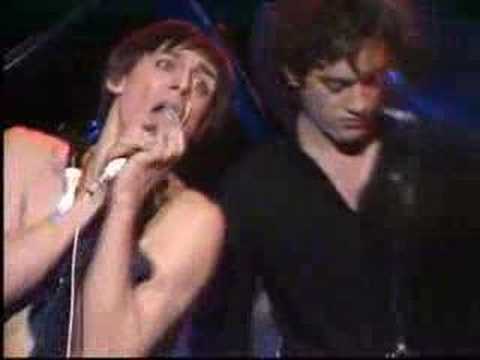
I Wanna Be Your Dog arrived like a dare. Recorded for The Stooges' self-titled debut album and released in 1969, the track was written by the band-credited to Iggy Pop, Ron Asheton, Scott Asheton, and Dave Alexander-and it instantly distilled the group's whole aesthetic into a single, brutal three-minute statement. Where so many late-60s records still clung to psychedelic ornament, this song stripped rock down to a grinding riff, a deadpan howl, and a kind of performative embarrassment that felt both ancient and startlingly modern.
The record was made in Los Angeles with John Cale at the controls, and those sessions are as much a part of the song's legend as the music itself. Cale's production emphasized the physicality of sound: guitars buzz like an electric swarm, bass and drums lock into a menacing stomp, and Iggy's vocal sits low, almost conversational. There are stories from the studio about the band chasing a particular mood rather than polishing a performance, and the finished take keeps that live, dangerous immediacy-you can hear the edges, the breaths, the room, and it makes the whole thing feel like a provocation rather than a product.
Musically the track is almost minimalist in its cruelty. A simple, repetitive riff becomes an atmosphere: no flashy solos, no chord changes that take you somewhere else. That single-mindedness was radical in its own way. Ron Asheton's guitar, distorted and unadorned, acts less like an instrument and more like a texture. The rhythm section pushes the song forward with an insistence that feels both mechanical and erotic. Iggy's delivery-equal parts sneer and plea-makes the repetition of the hook build not toward catharsis so much as obsession.
At the heart of the song is its lyric and the strange intimacy it cultivates. Saying "I wanna be your dog" flips conventional ideas of desire and agency into something raw and animalistic. It's a line that collapses romance and humiliation into a single image: submission as a form of worship, longing as degradation, craving as identity. That contradiction-wanting to be both seen and erased-resonates because it's honest about the messiness of attachment. Iggy's voice never romanticizes the surrender, it frames it as compulsion. The song turns surrender into spectacle, and in doing so it forces listeners to confront how desire can be lonely, degrading, and profoundly human all at once.
The cultural echo of that moment has been long and wide. While it wasn't a top-40 hit, the song became a touchstone for what punk would become: an emphasis on rawness, attitude, and the idea that music could shock by being real rather than virtuosic. Its influence is felt in the way later bands embraced repetition, noise, and performance-as-identity. Listeners and critics have pointed to it as a blueprint for punk's aggression and economy. Beyond influence, the song has settled into a broader cultural imagination as a shorthand for raw sexual frankness and urban menace.
There are interesting tensions and controversies around the song that have kept it alive in conversation. Performed live, it could be confrontational in the extreme-partly because Iggy treated the stage as theater and partly because audiences weren't always sure how to react to a song that demanded complicity in its humiliation. Over the years debates have circled its candid expression of desire and the ethical readings of performative submission, conversations that mirror broader discussions about performance, consent, and spectacle in rock.
Given its potency, it's no surprise that artists across generations have returned to the song. It's been covered by a wide range of musicians from garage-rockers to alternative artists, each finding new edges in its simplicity. Those covers underscore the tune's durability: stripped down to a riff and a line, it remains a provocative little machine, endlessly adjustable to whatever nerve a new performer wants to touch.