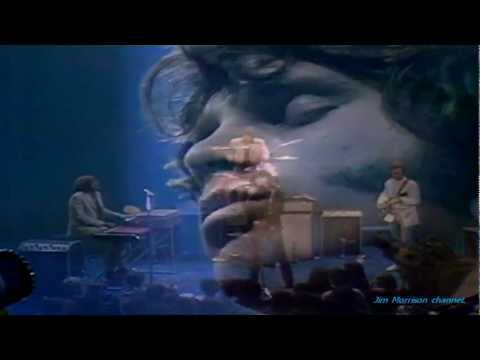
Riders on the Storm arrives like the weather it describes: cool, ominous and inevitable. Released in 1971 on The Doors' final studio album with Jim Morrison, L.A. Woman, the song has come to stand not only as a centerpiece of that record but as a late-career distillation of everything the band had been exploring - blues roots, cinematic atmosphere, and Morrison's fascination with the darker currents of American myth and psyche.
The song is credited to The Doors as a collective, and that credit matters because what you hear is a group performance more than a typical frontman-and-band arrangement. They recorded L.A. Woman at Sunset Sound in Los Angeles during late 1970 and early 1971 in sessions that were famously raw and live-in-the-studio. Longtime producer Paul A. Rothchild walked away from those sessions, reportedly unhappy with the direction, and engineer Bruce Botnick stepped into a co-producer role; that change helped steer the record toward a looser, more immediate sound that "Riders on the Storm" benefits from.
Sonically the track is an exercise in mood. Ray Manzarek's electric piano - a murmuring, tremolo-laced part - establishes a rain-slick texture, while Robby Krieger's guitar and John Densmore's restrained, jazz-tinged drumming keep the rhythm both steady and unsettled. Jim Morrison layers his delivery, alternating between the low, conversational baritone and intimate whispers; it's a vocal performance that sounds like a man both narrating and conjuring a noir nightmare. The record also folds in thunder and rainfall effects that envelope the instruments rather than act as cheap theatrics, helping create the song's claustrophobic, nocturnal world.
At its heart, though, "Riders on the Storm" is a lyrical meditation. Opening lines such as "Into this house we're born / Into this world we're thrown" read like an existential pronouncement - life as a tempest you are obliged to navigate. The recurring image of riders moving through a storm evokes the American road as both refuge and threat: a place where freedom, loneliness and danger co-exist. Then comes the chilling intruder, the line "There's a killer on the road," which crystallizes the song's moral ambiguity. Is the killer a literal threat? A metaphor for latent violence in society? A shadow-side of the self? Morrison's phrasing resists easy resolution; the lyric suggests that survival on the road - moral or otherwise - depends on an uneasy negotiation with forces you may not fully understand.
When it was issued as a single in 1971, the song became one of The Doors' last big hits in Jim Morrison's lifetime, landing in the Top 20 in the United States and peaking at number 14 on the Billboard Hot 100. Its commercial success did not blunt its mystique; on the contrary, the record's reputation grew as listeners and critics alike picked apart its mixture of noir storytelling and spare, blues-derived music. The timing added poignancy: Morrison would die a few months after the album's release, making this and other tracks from L.A. Woman part of the final spoken lines of his career.
Beyond charts, "Riders on the Storm" has threaded through popular culture in ways that underline its cinematic quality. It has been used in film and television and is a staple of classic rock radio playlists; in retrospectives and tributes it routinely functions as shorthand for the Doors' late-period aura. The song's "killer on the road" image and Morrison's whispering delivery have kept it in conversations about songcraft and controversy, and the recording sessions themselves - with Rothchild's departure and the band's decision to go for a more spontaneous sound - are often cited as emblematic of the album's character.
There are plenty of interesting footnotes. The band intentionally recorded much of L.A. Woman in a more stripped-down, live fashion than some of their earlier studio work, and that gives "Riders on the Storm" its sense of immediacy. The shifting production personnel and the group's willingness to embrace a grittier approach made the song feel less like a polished single and more like a nocturne performed at the bar's edge. Over the decades numerous artists have found something to reinterpret in the track; instrumental, electronic and live tribute versions have surfaced, underscoring how its rainy mood and haunting hook translate across genres.
Ultimately, the song endures because it balances story and atmosphere without sacrificing ambiguity. It invites listeners into a small, dangerous world and then leaves them there, riding through the night with the radio as their only company. That unresolved tension - between motion and menace, between the road's promise and its perils - is the song's central attraction, and why it continues to be discovered and argued over by successive generations.