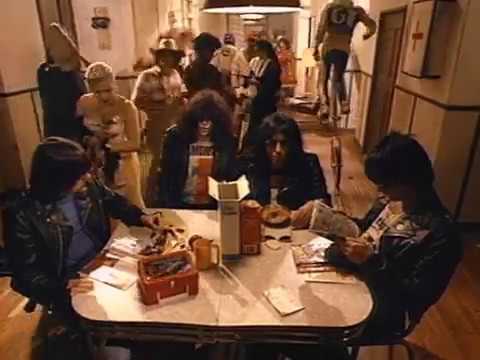
I Wanna Be Sedated
There are songs that arrive like a lightning bolt and then, years later, feel more like a neon sign-familiar, unavoidable, and oddly comforting. "I Wanna Be Sedated" by the Ramones is one of those songs. Released in 1978 on the album Road to Ruin, it distilled the band's minimal, high-energy blueprint into a short, almost clinical confession. The track's relentless forward motion, clipped guitar chords and Joey Ramone's deadpan delivery turned a simple chorus into a cultural shorthand for exhaustion and escape.
Joey Ramone wrote the song, and it sits among his most immediately recognizable compositions. On paper the lyric is deceptively plain: a repeated desire to be numb, a list of mundane frustrations, and a polite resignation to chemical quietude. In practice the repetition and the jaunty tempo push the sentiment into an ironic space-it's not merely a plea for sedation, it's a punk-era scream about being overwhelmed by life, touring, pressure and the ceaseless churn of modern existence.
The Road to Ruin sessions captured a band at a pivot point, and "I Wanna Be Sedated" benefits from that focus. The recording is spare but precise: guitars sawing at three chords, a propulsive drumbeat, and layered vocal takes that sharpen Joey's weary tone. Producers and engineers on those sessions kept the sound close to the band's live immediacy rather than fluffing it into studio gloss, which makes the song feel immediate and claustrophobic in the best way. That compression-sonically and lyrically-helps sell the paradox of a peppy-sounding song about wanting to be shut down.
Lyrically the song works on two levels. On the surface it's a comic, almost juvenile litany-get me out of here, put me under, I just want to check out. Beneath that surface there's a more biting diagnosis of burnout. The insistence of the title line, repeated until it becomes ritual, reads like a mantra against anxiety: the singer doesn't just want to sleep, he wants release from the sensory overload that touring and fame can bring. The short, beat-driven phrasing mimics the panicked breath of someone trying to keep pace with a life that won't slow down.
Beyond its musical virtues the track has had an outsized cultural afterlife. It never needed to top charts to become one of the Ramones' signature songs; instead it entered the public imagination through steady exposure-airplay, compilation albums and countless uses in popular culture-until its chorus was shorthand for urban malaise and holiday-season overstimulation alike. Its enduring popularity says something about how a four-chord pop-punk song can capture a universal emotion and keep resonating across generations.
There are interesting footnotes to the song's story. The Ramones' economical songwriting and recording techniques are on full display here: a simple structure, immediate performance, and a studio approach that emphasized attitude over ornament. That economy left room for bands and artists from different corners of music to reinterpret the song, and over the years it has been covered and reimagined by acts across punk, indie and mainstream spheres-testimony to its flexibility and the universality of its central line.
If the brilliance of "I Wanna Be Sedated" is its apparent simplicity, its power is how that simplicity telescopes complicated feelings into a compact pop bullet. When a band known for speed and brevity writes a song about wanting everything to stop, the tension between form and content becomes the point. Nearly half a century after Road to Ruin, the song still hits because it names a very modern ache with an unadorned phrase-and then keeps repeating it until you can no longer deny you feel it too.