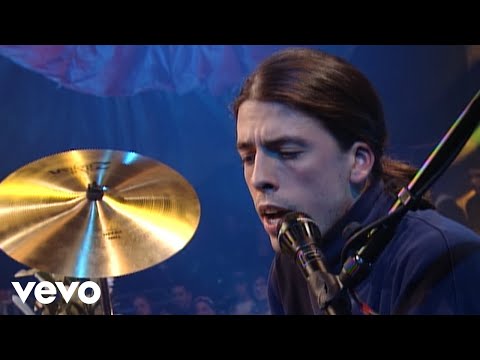
Nirvana - "Polly"
Polly is a song written by Kurt Cobain and performed by the American rock band Nirvana. It appears as the sixth track on the band's second studio album, Nevermind, released in 1991.
Writers, year, and album
Writer: Kurt Cobain (credited).
Album: Nevermind.
Year of Nevermind release: 1991.
Recording facts and studio details
"Polly" was recorded during sessions at Smart Studios in Madison, Wisconsin, in April 1990 with producer Butch Vig. That acoustic take from the Smart Studios session was the only recording from those early Vig sessions to appear on Nevermind; the rest of the album's principal tracking was completed later at Sound City Studios in Van Nuys, California. The Nevermind album session preserved Chad Channing's cymbal work on "Polly" rather than re-recording the song with Dave Grohl.
Performance and technical notes from the session: Kurt Cobain played a five-string Stella acoustic guitar on the recorded Nevermind take; in interviews he said he bought that guitar at a pawn shop and did not change the strings, describing it as poorly in tune. Producer Butch Vig and mixer Andy Wallace have described production choices on the track, including keeping the original Smart Studios acoustic take and applying mixing techniques (for example, subtle delay on cymbal hits) during later work on the album.
Composition and arrangement
The released Nevermind version is a spare acoustic arrangement featuring Cobain on acoustic guitar and lead vocal, Krist Novoselic on bass, and Chad Channing contributing cymbal crashes. The recorded length of the song on Nevermind is approximately three minutes. The arrangement is notable for its quiet, haunting acoustic delivery on an otherwise loud-recorded album.
Subject, origin and expanded meaning
"Polly" was written after Kurt Cobain read press reports about a real 1987 abduction and assault case in Washington state. According to accounts by biographers and news reporting, the song takes the perspective of the perpetrator of that crime; Cobain later explained publicly that he was attempting to confront and condemn sexual violence by forcing listeners to hear the abuser's voice rather than to sympathize with it.
In interviews Cobain discussed the issue of sexual assault directly and described the broader intent behind material such as "Polly." In a 1991 interview he argued that prevention efforts should address perpetrators, saying that "what really needs to be done is teaching men not to rape" and urging that focus "go to the source." Those remarks have been cited in multiple contemporary interviews and later profiles.
Expanded interpretation: Cobain's choice to write from a perpetrator's viewpoint is widely discussed by critics and scholars as a deliberate artistic strategy intended to unsettle listeners and redirect moral attention toward the crime and its causes. Cobain and others associated with the band consistently framed "Polly" as a protest against sexual violence rather than a celebration of it. Where direct band commentary exists, it emphasizes condemnation of the crime and sympathy for victims; where public reaction has misconstrued the piece, Cobain expressed dismay.
Controversies and public reaction
The song has been the subject of controversy in two main ways. First, because its lyrics come from an abuser's perspective, some listeners have misinterpreted or criticized the song without the contextual statements Cobain and the band made about its purpose. Second, Incesticide liner notes and contemporary reporting record an alarming incident: a report noted that, in 1991, some people committed sexual violence while singing "Polly," an event that deeply angered Cobain and prompted him to call out hateful or abusive fans in his liner notes. Cobain's liner-note admonitions against racism, sexism, and homophobia appear in Incesticide and are commonly quoted in accounts of the band's public stance.
Chart performance and single releases
"Polly" was not issued as a major commercial single from Nevermind and did not register as a charting single in the principal national charts on initial album release. A live acoustic rendition recorded for MTV Unplugged in 1993 was issued as a promotional single in 1994 and received alternative and rock radio airplay, but it did not produce notable mainstream chart placements comparable to Nevermind's hit singles. Where live versions were issued as B-sides on other singles (for example, live "Polly" material appearing on some formats connected to the "In Bloom" single), chart credit typically attached to the promoted A-side rather than to "Polly" itself.
Cultural relevance and media uses
"Polly" has been widely discussed in critical retrospectives of Nirvana's work as one of the darker, more confrontational songs on Nevermind. Music writers and critics frequently cite it when examining Cobain's engagement with themes of gender and violence. The track has been included in multiple live and compilation releases (including BBC sessions and live concert albums) and was performed acoustically on the MTV Unplugged set.
In interactive media, "Polly" has been made available as downloadable content in rhythm video game platforms, appearing in Rock Band titles and related downloadable catalogs. That presence has contributed to ongoing public exposure of the song to newer audiences through licensed game libraries.
Notable cover versions
Several artists have released recorded covers of "Polly." Notable examples that have documented releases include:
- Amanda Palmer - a cover released as part of SPIN's Newermind tribute compilation and on Palmer's recordings.
- Animal Collective - released "Polly" as a B-side on a limited single.
- Little Roy - reggae-tinged covers album that includes "Polly."
- Walk Off the Earth - included as part of a covers collection.
- Other tribute and reinterpretation releases have appeared on charity and tribute compilations, and additional live and recorded covers circulate in the public record.
Live history and releases
"Polly" dates back in Nirvana's live repertoire to at least 1989 and appears in various live recordings released across official and archival collections. In addition to the Nevermind studio take, the band released alternate takes and live versions across compilations such as Incesticide and later reissue packages. The MTV Unplugged rendition (recorded November 18, 1993) is among the better-known live acoustic versions and was distributed as promotional material to support the Unplugged release.
Reception and legacy
Critics and commentators commonly single out "Polly" as an example of Cobain's willingness to address uncomfortable social realities and to use narrative perspective as critique. The song's spare arrangement and disturbing subject matter have made it a lasting subject of analysis in discussions of Nirvana's politics and Cobain's public statements on gender and violence. Retrospective lists and critical rankings by music publications often include "Polly" among Nirvana's significant non-single tracks.
Contemporary notes and sources
This article relies on documented interviews, band-discography records, published biographies, and contemporary reporting for its factual assertions about the song's recording, inspiration, and reception. Where the band or Kurt Cobain spoke directly about the song in interviews or liner notes, those comments are noted above. If you would like specific primary-source interview transcripts, liner-note text, or session logs cited or reproduced, I can provide a focused summary or verbatim excerpts where allowed.
Short lyric excerpt
Excerpt (under 10 words): "Polly wants a cracker."