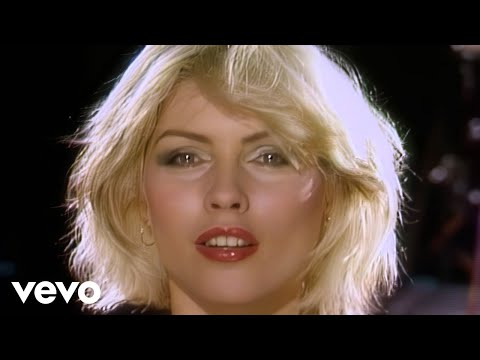
"Heart of Glass" arrived at a moment when genres were still carving out their borders. Blondie's single, released in 1979 and taken from their 1978 album Parallel Lines, felt like a deliberate swerve: a New York rock band flirting with disco and turning that flirtation into something cool and brittle. Written by Debbie Harry and guitarist Chris Stein, the song announced itself with a pulsing beat and a detached vocal that made heartbreak feel stylishly inevitable.
Recording the track was a process of reinvention. Under producer Mike Chapman the band moved away from earlier, looser versions of the song - which had been performed by the band in different tempos and arrangements - toward a clipped, dance-ready groove. Chapman, known for his pop craft, helped hone the tempo, the hi-hat-driven rhythm and the synth flourishes that gave the record its modern sheen. The studio choices turned what might have been a small-band lament into a machine-perfect pop single, and those choices are audible in every crisp snare and shimmering keyboard line.
The gamble paid off in the marketplace. "Heart of Glass" became Blondie's biggest international hit, topping the US Billboard Hot 100 and turning the band into a crossover phenomenon. What had begun in the downtown New York clubs as a curious hybrid found mass audiences on AM radio, in discos and on jukeboxes, and in doing so it rewrote expectations about what a rock band could do without abandoning its identity.
Song Meaning
At the center of the song is a simple, terrible paradox: music that invites you to dance while lyrics insist the thing you loved has turned to fragility. Lines like "Once I had a love and it was a gas" and the repeated "heart of glass" trade on ephemeral joy and sudden collapse. Debbie Harry's delivery is crucial - cool and conversational, never overwrought, which makes the emotional content feel both intimate and distilled. The effect is a study in emotional inversion: the beat says keep moving, the words say beware, and the voice keeps you suspended between the two.
Lyrically, the song reads as a meditation on disillusionment. It is not a full-throated accusation so much as a weary recognition that something warm and whole has become brittle under pressure. The repetition of melodic hooks against terse images of breakage emphasizes that this is as much about memory and the way we reconstruct relationships as it is about betrayal. The disco pulse becomes a perfect foil for those lyrics - dancing as a form of denial, movement as an antidote to the sharpness of realization.
Culturally, "Heart of Glass" opened a fissure that mattered. For fans who had placed Blondie in the punk-adjacent camp there was an immediate backlash - the record was accused of selling out to disco - but that reaction ignored what the song really did: it blurred categories in a moment when musical boundaries were often fiercely policed. In the decades since, that blurring has become one of the song's enduring strengths; it sounds of its time while remaining uncannily contemporary, and it resurfaced in films, television and compilations as shorthand for late-70s urban cool.
There are a few interesting aftershocks worth noting. The song's genesis in earlier, differently paced drafts shows how a few production decisions can transform a composition's whole personality. Debbie Harry's persona - simultaneously distant and charismatic - helped carry the transformation without ever making the song feel false to the band's identity. And while purists grumbled in the moment, history has treated the risk as one of Blondie's most decisive moves: a pop experiment that wound up widening the palette for rock bands that followed.
The legacy of "Heart of Glass" is not just in chart numbers but in the way it expanded possibility. It spawned remixes, inspired reinterpretations across genres, and continues to be covered and reimagined by artists drawn to its paradoxical heart: a dance track about something breaking. Decades on, it still sounds like a small miracle of arrangement and performance - a song that lets you move even as it teaches you how to listen.