Ever Fallen in Love
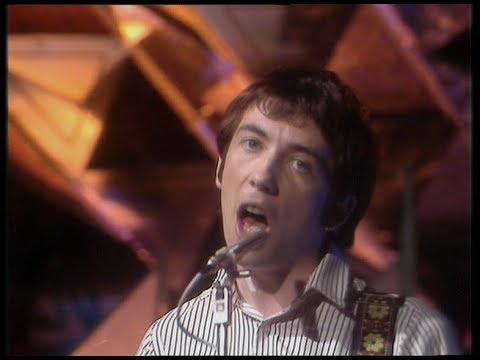
In the late 1970s, when punk was splintering into brighter, hook-driven forms, Buzzcocks released a song that married bruised emotion to irresistible melody: "Ever Fallen in Love (With Someone You Shouldn't've)". Penned by Pete Shelley and issued in 1978, the track quickly became shorthand for the group's ability to package vulnerability and urgency into under-three-minute pop songs. It sits easily alongside the era's sharpest singles yet resists being pigeonholed as merely a punk anthem.
The recording captures the band at a moment where rawness and craft were equally in play. The arrangement trades the confrontational howl of punk for jangling guitars, clipped drums and a melody that clings to the ear. Shelley's vocal delivery-equal parts rueful and resigned-gives the lyrics their sting; the band supports him with tight, nervous energy that keeps the song propulsive without ever overpowering its fragile center. Listeners feel the song was made quickly and with intent, as if the emotions fueling it needed no second thought.
At its heart, the song is a study in contradiction. The title's parenthetical admission-"With Someone You Shouldn't've"-sets up the moral friction, and the lyrics move through shame, longing, and a kind of self-mocking bewilderment. Lines pivot between confession and rhetorical question, and that movement is where the song finds its power: it never fully laments nor celebrates, it simply registers the destabilizing fact of desire. That oscillation-joy threaded through embarrassment, tenderness tangled with self-reproach-is the emotional truth that keeps listeners returning.
From a songwriting perspective, Shelley's genius is in making a very particular, awkward moment feel universal. The song doesn't dwell on specifics; there are no names, no scenes, only the ache and the rhetorical beating of the heart. That anonymity is why the song reads like a diary entry anyone might have written at three in the morning. Melodically, the chorus resolves in ways that feel inevitable, as if the music has known the confession before the speaker has found the words, which is why the track has remained a touchstone for songs about complicated attraction.
Its cultural footprint has been wide: radio playlists, countless playlists of heartbreak, and a steady stream of cover versions attest to its durability. Artists from different scenes have reinterpreted it, and there is a notable cover by Fine Young Cannibals among others who have revisited the tune, each reading emphasizing different facets-fun, regret, or outright pop polish. That flexibility is part of the song's achievement: it can be bared down to punk rust or smoothed into glossy pop and still retain its emotional core.
There are small, interesting details that add texture to the song's story. The clipped, conversational title-complete with the contraction that reads like spoken English-made it stand out at a time when pop titles were either blunt or coy; Buzzcocks chose wit and awkward honesty. Over the decades, the song has been cited by musicians and fans as a perfect distillation of romantic failure and longing, and it continues to be discovered by new listeners who find in it a concise truth about the messy business of falling in love.
Listening now, "Ever Fallen in Love" still feels immediate: concise, trembling, and perfectly formed. It is both a signature moment for Pete Shelley as a songwriter and for Buzzcocks as a band that could translate the emotional complications of late-night thought into a three-minute pop classic. Its enduring appeal lies in the way it captures that familiar, foolish, and terrible human condition-wanting someone you know you shouldn't-and sings it out loud with wit, tenderness and a little bit of bite.