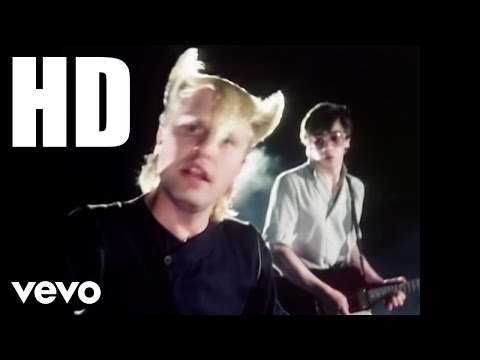
Space Age Love Song
When A Flock of Seagulls released their self-titled debut album in 1982, among the record's shimmering synths and echo-laden guitars stood "Space Age Love Song"-a track that captured the band's ability to translate apprehensive romance into neon-lit sonics. Credited to the band and produced during the sessions for that debut, the song helped define A Flock of Seagulls' early sound: atmospheric, sleek, and slightly otherworldly.
The sessions for the album were overseen by producer Mike Howlett, and the recording emphasized texture as much as tune. Synth pads and arpeggiated keyboard lines float beneath a chiming, delay-heavy guitar, while the drums are measured and steady-less a barrage than a metronome for the song's swooning narrative. Band members experimented with chorus, flanger, and echo to create an aural sense of distance; that studio work is the song's emotional engine, turning simple melodic motifs into something that feels both intimate and vast.
On the surface, "Space Age Love Song" reads like a concise love song, but the arrangement and production complicate that straightforward reading. The title itself invites a metaphor: the romance at the center of the song is experienced as if through the filter of modernity and technology. The narrator is struck by someone whose presence feels futuristic, luminous, almost ungraspable-an encounter that elicits awe as much as yearning. The music's glacial synths and angular guitar gestures render the beloved both proximate and remote, suggesting that contemporary desire can feel like contact across a void.
Lyrically, the track resists literal storytelling and instead trades on impressionistic images. Rather than charting a relationship, it captures a moment of recognition-an electric spark transformed into space-age imagery. That contrast between emotional warmth and mechanical vocabulary is key: the song admits to loneliness and distance but also to wonder. In performance, the lead vocal's slight strain and the production's shimmering reverberation emphasize longing; the arrangement makes the listener feel suspended, orbiting the object of affection rather than touching down.
Part of the song's cultural staying power comes from that synthesis of feeling and futurism. It arrived at a moment when new wave and post-punk acts were redefining pop with synths and studio craft, and A Flock of Seagulls' aesthetic-both sonic and visual-became shorthand for early-80s forward-looking romance. The band benefited from the emerging music-video era: the imagery of their sound matched the visual appetite of MTV and helped the song live on in 80s playlists and nostalgia circuits. The single's production techniques-especially the shimmering guitar tone-have been cited by musicians and producers as emblematic of the era's textural priorities.
There are a few interesting footnotes to the song's story. The band's guitarist, Paul Reynolds, carved out a signature sound that balanced rhythmic clarity with dreamy effects, and that guitar voice is as important to "Space Age Love Song" as the vocal hook. Though not without the usual retroactive caricatures-the haircuts and the sci-fi tropes-the song endures because it never lets style completely overrun sentiment. While there are no blockbuster cover versions that have eclipsed the original, the track is frequently revisited by tribute acts and appears on compilation discs celebrating early-80s new wave, a modest testament to its continued appeal.
Listening to "Space Age Love Song" today, you hear more than nostalgia: you hear a small parable about how modern life reframes intimacy. Technology and distance are part of the metaphor, but the core remains human-a sudden, disorienting attraction that feels too brilliant and strange to fully claim. In that way the song still resonates: it offers a concise pop moment that suggests the future without losing the ache at its center.