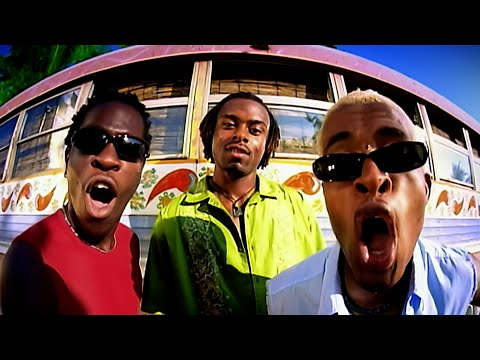
Baha Men - "Who Let the Dogs Out?"
A factual overview of the song, its origins, recording, chart history, cultural reach and legal disputes.
Basic facts
"Who Let the Dogs Out?" is a recording released by the Bahamian group Baha Men in 2000. The song is credited to Trinidadian songwriter Anslem Douglas and appears on the Baha Men studio album Who Let the Dogs Out, released in 2000.
Writers, year and album
Writer: Anslem Douglas (originally recorded as "Doggie").
Year: 2000 (single release by Baha Men).
Album: Who Let the Dogs Out (studio album by Baha Men, 2000).
Recording facts and studio details
The Baha Men recording was produced for the 2000 album sessions by a team that included Steve Greenberg and Michael Mangini among others; production credits on the album also list several additional producers. Recording and mixing for the album took place at multiple studios, including Circle House (Miami), the Gentlemen's Club (Miami Beach) and Mojo Music (New York). Engineers and mixers are credited on the album liner notes.
Chart performance and awards (verified)
United States: The Baha Men recording reached the Top 40 on the Billboard Hot 100, peaking at number 40.
United Kingdom: The single reached number 2 on the UK Singles Chart.
Australia and New Zealand: The single reached number 1 in both Australia and New Zealand.
Awards: The Baha Men version won the Grammy Award for Best Dance Recording at the 2001 Grammy Awards.
Cultural relevance and notable media uses (verified)
The Baha Men version became a broadly recognized party and stadium anthem in the early 2000s and was used in major movie soundtracks. It was included on the soundtrack for Rugrats in Paris: The Movie (2000). The recording later appeared on other soundtrack compilations and has been used widely at sporting events.
Verified soundtrack inclusions include Rugrats in Paris: The Movie and the Men in Black II soundtrack release. The song has also been reported as used in other films and as stadium walk-up music during the 2000 baseball season, but usage varies by production and release; the Rugrats appearance and Men in Black II soundtrack listing are explicitly documented.
Controversies and legal disputes (verified)
After Douglas's original Caribbean release and the Baha Men version, multiple disputes and lawsuits arose over authorship and elements of the hook. Parties named in public reporting and court filings or settlements include Ossie (Osbert) Gurley and the Toronto producers Patrick Stephenson and Leroy Williams, among others. Some suits were settled out of court and details of settlements have been reported as confidential in places; public accounts describe several years of litigation and settlements without a single, definitive judicial ruling on the ultimate origin of certain hook elements.
Because several claims overlapped chronologically and some settlements were confidential, the exact chain of origin for the chant and barking hook remains the subject of competing accounts in published reporting and has not been resolved by a single, public judicial finding that establishes a single origin for every element.
Notable cover versions and earlier recordings
Original / earlier recordings and notable versions documented in reporting:
- Anslem Douglas recorded the song as "Doggie" in the late 1990s; this is the composition credited to Douglas.
- Jonathan King recorded a version under the name Fatt Jakk (Fatt Jakk and his Pack of Pets), a version that figures in the song's circulation prior to the Baha Men recording.
- Localized or derivative versions have appeared in other markets; for example, a Brazilian recording adapting the idea has been identified as "O Baile Todo (So as Cachorras)" by Bonde do Tigriao in published discography references.
Expanded song meaning
Anslem Douglas, the credited songwriter for the original "Doggie," has stated in interviews and in documentary accounts that his original composition was written from a female perspective and was meant as a rebuke of men who catcall or verbally harass women at parties. In that explanation, the "dogs" metaphor refers to disrespectful men rather than actual animals. This interpretation is documented in Douglas interviews and in coverage that includes documentary transcripts.
Baha Men themselves are best known for popularizing the energetic party arrangement; explicit, detailed published comments from the Baha Men about the original songwriters' intended meaning are limited in available public interviews. Where band members have publicly discussed the song in recent press features they have emphasized the song's enduring popularity and legacy rather than reinterpreting the original songwriter's stated intent. Thus, the most directly attributed interpretation of the lyrics comes from Anslem Douglas.
Notable recording and production credits (selected, verified)
Selected production and studio credits for the Baha Men recording and album sessions include producers Steve Greenberg and Michael Mangini among others; the album credits list multiple producers and programmers. Recording locations documented for the album include Circle House Studios (Miami), the Gentlemen's Club (Miami Beach) and Mojo Music (New York). Album liner notes and distributor listings provide the primary verification for these credits.
One short lyric excerpt
Who let the dogs out? Woof, woof, woof, woof
(Excerpt limited to a short phrase.)
Summary and what remains unclear
The Baha Men recording of "Who Let the Dogs Out?" is a 2000 global pop-cultural phenomenon: it was written originally by Anslem Douglas, recorded and produced for international release by Baha Men in 2000, attained high chart placings worldwide and won the 2001 Grammy Award for Best Dance Recording. The recording's rise involved multiple prior versions, a network of producers and promoters, and subsequent legal disputes over elements of the hook; several disputes were settled confidentially, and reporting documents overlapping claims without a single, conclusive court ruling that resolves every question of origin. For those provenance questions that remain contested, public reporting and documentary sources document the competing claims rather than a single, definitive judicial resolution.