Rise Above
Few punk songs have the blunt, immediate power of Black Flag's "Rise Above." Bursting out of the band's 1981 LP Damaged, the track distilled the fury and defiance of the emerging hardcore scene into a compact, unforgettable anthem. It was the moment when Black Flag's music, Henry Rollins' punishing vocal attack, and Greg Ginn's serrated guitar work crystallized into something that sounded less like a song and more like a public proclamation.
"Rise Above" was recorded as part of the Damaged sessions and released in 1981 on SST Records. The piece is credited to the band, with guitarist Greg Ginn serving as the primary composer. The album's stripped-down production and raw immediacy reflected the band's do-it-yourself ethos: there was no polishing away the edges, no studio gloss-just the band in a room, playing as if everything depended on it. That urgency is audible in the drums, the snapping riffs, and the way Rollins spits the lyrics; the recording catches the band at full tilt.
The recording sessions themselves are notable for their sense of intensity rather than for any studio trickery. Damaged was produced in the manner of many early SST records-direct and workmanlike-designed to capture the energy of Black Flag's live shows. The performances on "Rise Above" have a live feel: tight but barely contained, full of the kind of rhythmic stop-starts and sudden bursts that made the band sound confrontational. Those choices give the song a communal, almost ritual quality when heard in a room full of people.
At the center of "Rise Above" is its lyrical insistence. Rather than a specific narrative, the song presents an ethic: refuse containment, resist the pressure to conform, and keep asserting your own existence. The chorus acts as both command and confession-an insistence that you will not be defined or demeaned by someone else's rules. Rollins' delivery-urgent, abrasive, at times almost conversational-turns relatively spare lines into an existential demand. The power of the lyrics lies in their simplicity; they do not catalogue grievances so much as outline a stance, making the listener party to an act of defiance.
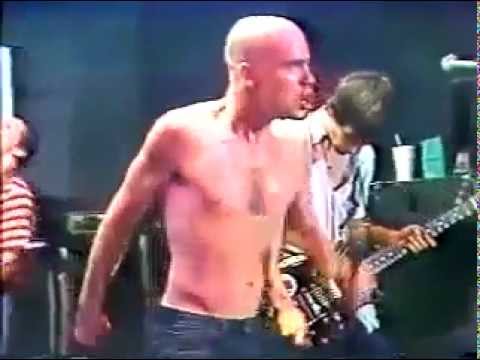
Musically, the song is a study in controlled aggression. Ginn's guitar riff underpins the entire track: terse, repetitive, and impossible to ignore. The rhythm section punctuates and launches into small bursts rather than long solos, which leaves space for the vocals to dominate. Live, "Rise Above" became a structural anchor for sets-short, fast, and incendiary, it functions as a focal point where audience and performer converge in a shared shout. The arrangement's economy is part of its brilliance: every note seems to exist to bolster the song's central command.
The cultural afterlife of "Rise Above" owes as much to what it represents as to any particular placement in media. It has come to stand as a shorthand for hardcore punk's refusal to be polite and its insistence on self-determination. The song's blunt call to resist systems of control resonated beyond the club circuit, finding an audience among disparate subcultures that prized independence and dissent. Whether blasting from cheap speakers at a house show or played at full volume in a practice room, the track sustained Black Flag's reputation as a band that wanted to unsettle comfortable certainties.
There are interesting contradictions wrapped up in the song's legacy. "Rise Above" is fiercely anti-authoritarian in spirit, but it was born from a band that was also doing business, releasing records and navigating the punk underground's emerging infrastructure. That tension-between DIY purity and the realities of making and distributing music-mirrors the song's own insistence on autonomy. More than thirty years on, "Rise Above" still reads as a provocation and a rallying cry: concise, combustible, and somehow both personal and collective in its refusal to be shut down.